Share the details

Business plans and feasibility studies built on real data.

The Client shares the business, the market and the money sought. Zatra Consultants writes the plan and the feasibility study with the verdict on page one, a lender summary and a 60-month Excel model, every figure with its source and date.

296sectors studied
6files for each sector
60months modelled
Set by scopeTimeline
Finished work

The standard, shown whole.

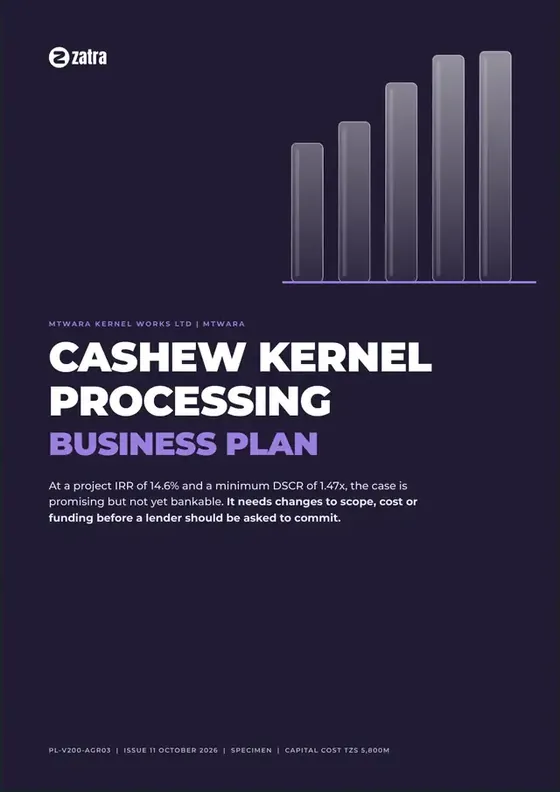
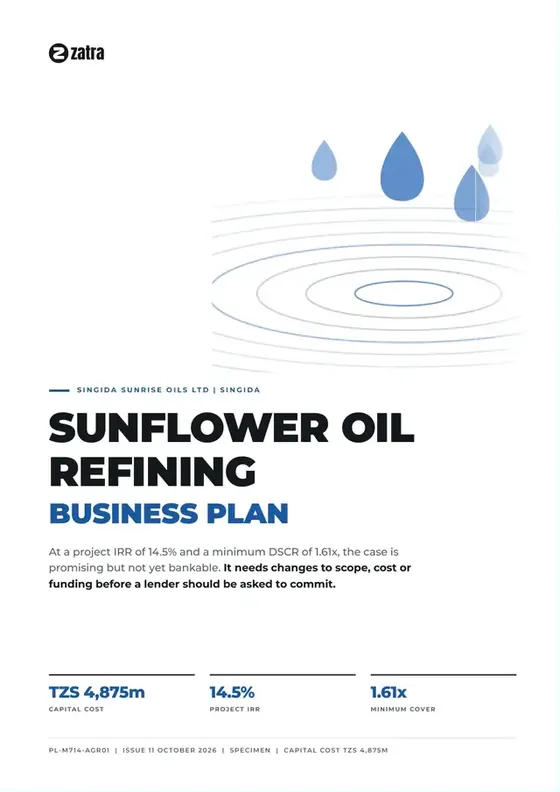
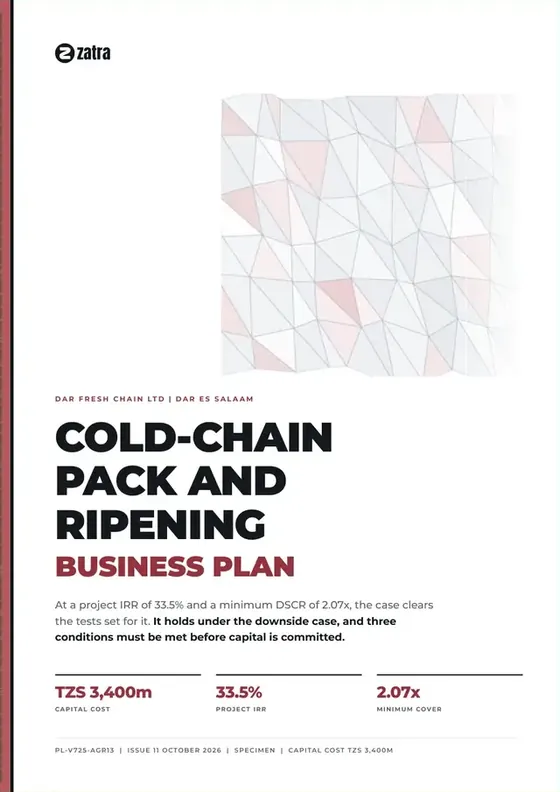
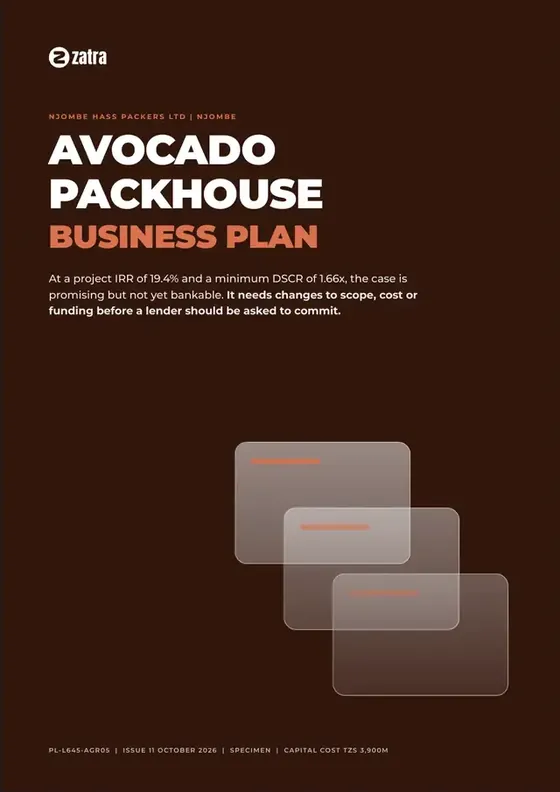
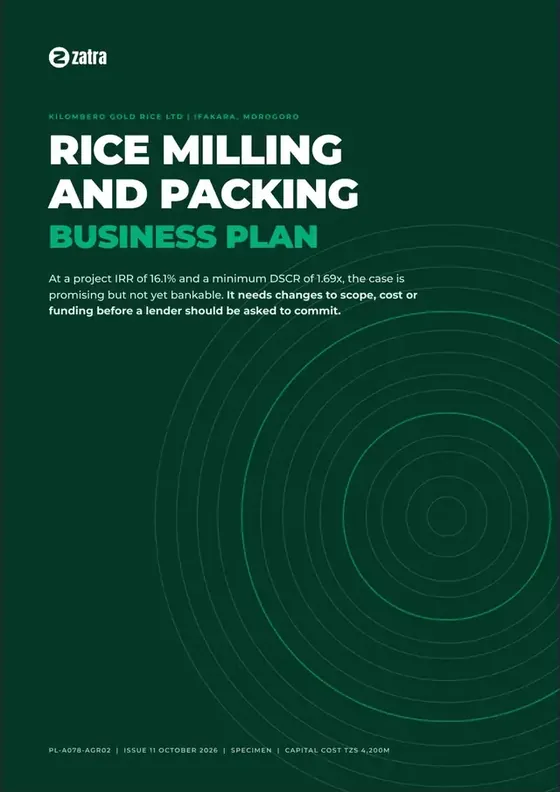
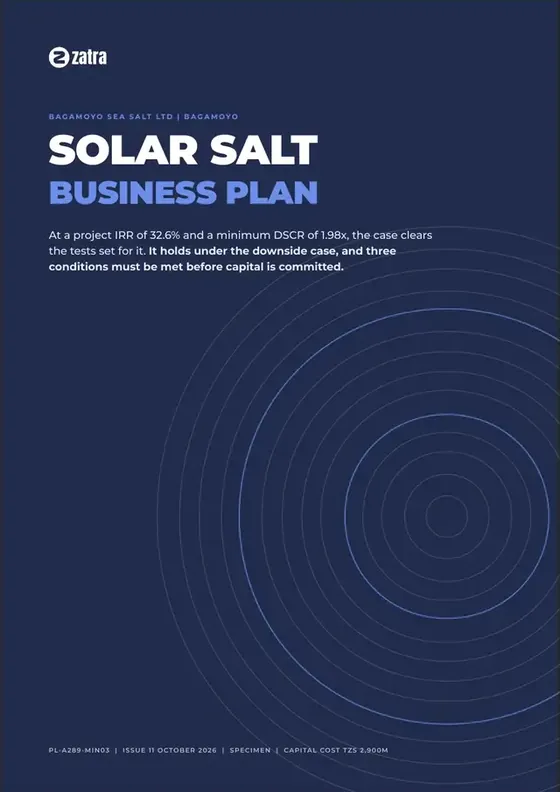
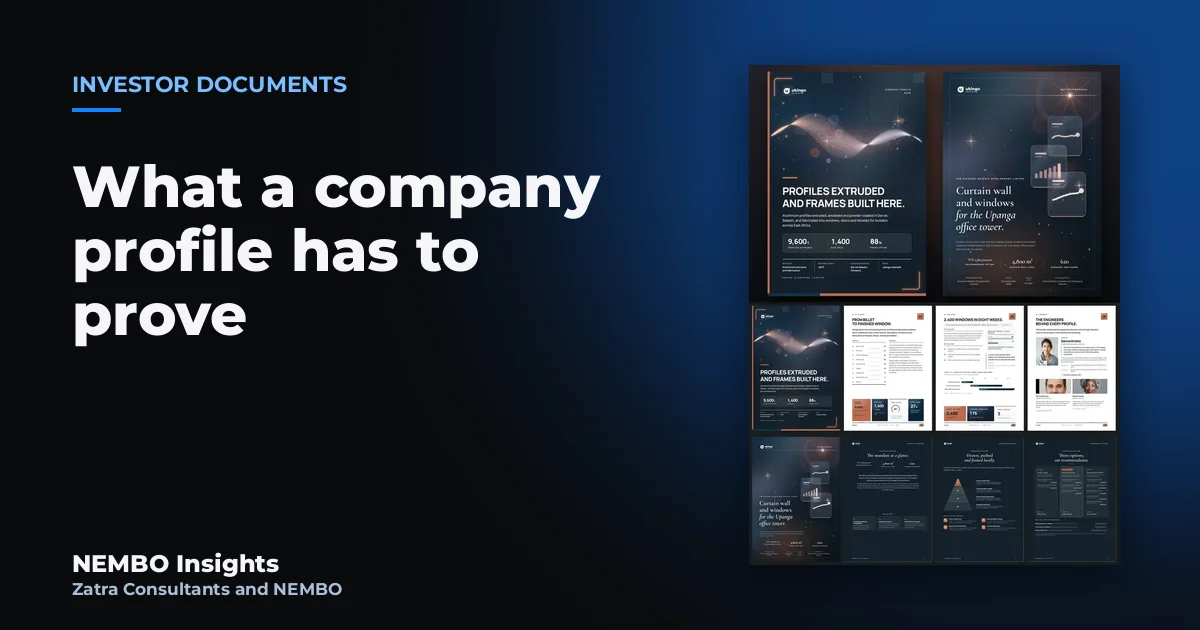
Finished work for fictional companies, shown whole. Select a page to enlarge it and step through the set. Specimens are not sold.

Sunflower oil refining
Tyre retreading
Family restaurant
Pest control
Precision auto-parts machining
Sugar-cane bagasse cogeneration
Build-to-rent apartments
Orthopaedic rehabilitation clinic
Hyperscale-ready data centre

Open all 296   The catalogue, page by page

Worries and relief

The worry first, then the relief.

What the Client is worried about, and what the finished document carries to answer it.

Worry

The bank returned the plan for missing evidence.

Relief

Every buyer segment is tagged Proven, Indicated or Assumed. Reserved and restricted activities, licences and the order of registrations come before any figure.

Worry

The owner cannot tell whether the idea clears a lender's tests.

Relief

A GO, REVISE or STOP verdict on the first page, worked out from written tests on project IRR, debt service cover and the evidence behind demand. Nobody tunes it by hand.

Worry

The lender will not read forty pages.

Relief

A lender summary in the order a lender reads, a deck and a one-page teaser that ask for the decision.

Worry

The numbers are in someone's head.

Relief

A 60-month Excel model with live formulas and a Base, Downside and Upside switch.

What the reader checks

Built for the reader who decides.

  1. Opens the documentThe verdict or the answer sits on page one.
  2. Checks the evidenceEach figure traces to a dated source.
  3. DecidesApprove, revise or decline, with the reason in hand.
The six files for each sector
  • Business plan
  • Feasibility study
  • Lender summary
  • Investor deck
  • One-page teaser
  • 60-month financial model
What the reader tests
  • Project IRR
  • Debt service cover
  • The evidence behind demand
  • Licences and the order of registrations
  • The downside case
Rejections handled

Where documents get turned down.

Rejected byA lender or bank
The reason given

The plan is returned for missing evidence.

The finished document carries
  • A GO, REVISE or STOP verdict on page one, from written tests on project IRR and debt service cover
  • Every buyer segment tagged Proven, Indicated or Assumed
  • A 60-month model with a downside case
Details in

What the Client shares.

Documents that must prove something. Where real data is not yet available, the data is gathered first and the timeline follows it. The written quote states the date for the scope agreed.

  1. Details inOne short form
  2. Zatra checksSources and figures
  3. NEMBO designsOne identity
  4. DeliveredEditable and print files
The Client shares
  • The business, the sector and the location
  • The amount sought and what it is for
  • Existing figures: sales, costs, quotes, licences
  • Who will read it: a lender, investor, regulator or board
What this is not
  • A plan is the Client's case, tested. No claim is made that any bank or authority requires a plan, other than where a primary source says so. Not legal, tax, valuation or investment advice.
What comes back

Itemised, not described.

Business plan

The sector's real problem, the market, the operation and the money, in the order a lender reads.

Feasibility study

Written tests on project IRR, debt service cover and the evidence behind demand, with the verdict on page one.

Lender summary

Fourteen pages in the order a lender reads, built to be sent without the full plan.

Investor deck and teaser

A deck that asks for the decision, and the case on one page for the first message.

60-month Excel model

Live formulas with a Base, Downside and Upside switch, in TZS or USD.

Evidence tags

Each segment is tagged Proven, Indicated or Assumed, so the reader sees what is measured.

The difference

Others, do it yourself, or Zatra and NEMBO.

The same document, three ways to get it.

Other providersDo it yourselfZatra and NEMBO
VerdictOptimistic throughoutNoneGO, REVISE or STOP on page one, from written tests
EvidenceClaims without a sourceWhatever is to handProven, Indicated or Assumed, on every segment
ModelA static tableA spreadsheet with hard-coded figures60 months, live formulas, Base, Downside and Upside
RegulationMentioned at the endOften missedReserved activities and licences tested before any figure
ReaderOne plan for every readerOne plan for every readerPlan, summary, deck and teaser for the lender, investor and authority

Time, cost and sales figures are service targets set against the Client's own baseline and stated in the written quote. They are not guarantees.

Timeline, By scope
Set by scope

Set by the evidence.

The date depends on the data available. Where real data does not yet exist, it is gathered first. The written quote states the date.

Cooperation

Advisers keep their clients.

Accountants, lawyers, consultants and agencies can refer this work, share it or hand over the part that does not fit, so the Client is served and nobody competes for the brief.

The partner desk
Brief

Share the details, receive the document.

Zatra Consultants Limited authors the content and checks the figures. NEMBO designs and delivers. The reply carries the written quote and the delivery time.

Zatra Consultants Limited: zatra.co. Registration, licensing and investment advisers whose routes the plan follows.

Share the details

Name, a way to reply and what the document is for. The written quote and the delivery time come back to the contact given.

Questions

Questions about business plans.

How long does a plan take?

The timeline depends on the documents and the data. The quote states the date for the scope agreed, and a slip is flagged on day two.

Does the Client get a template?

No. The plan is written on the Client's business and the Client's figures, and the model carries the Client's inputs.

Where does the data come from?

From the Client, from public sources cited with their date, and from field research where the scope includes it. Assumed figures are labelled as assumed.